Summary
Giant cell tumor is a benign but locally aggressive tumor that can occur in any bone. This tumor is uncommon in the foot.
Complete Information on this Tumor
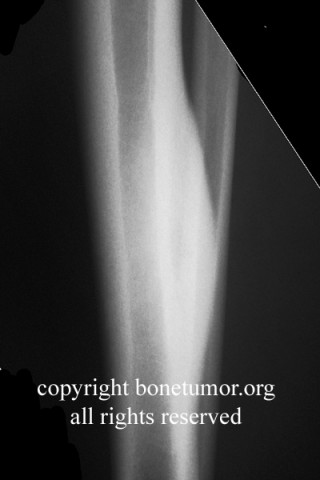
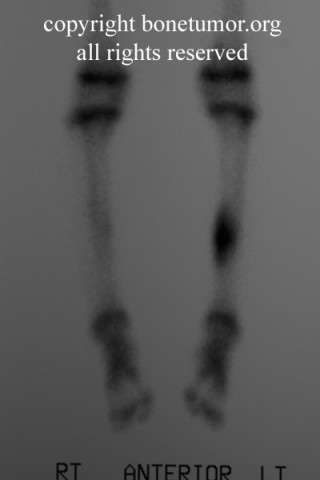
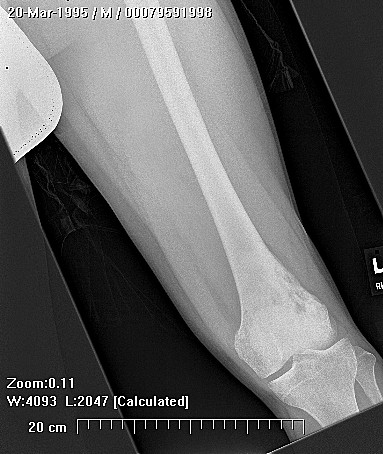
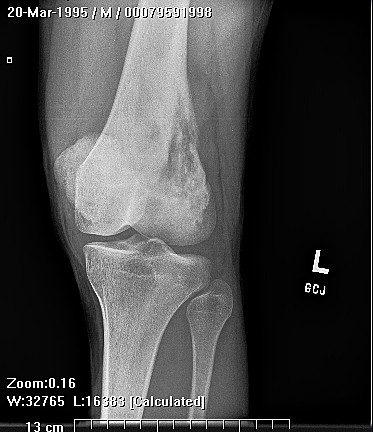
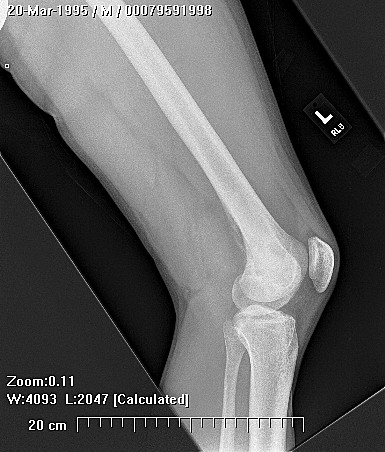
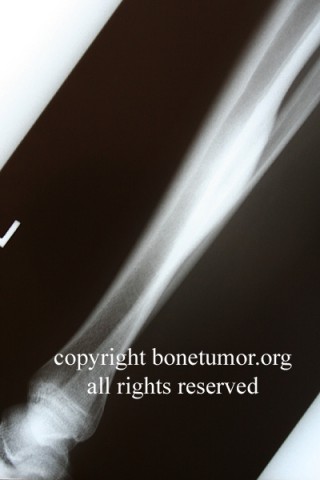
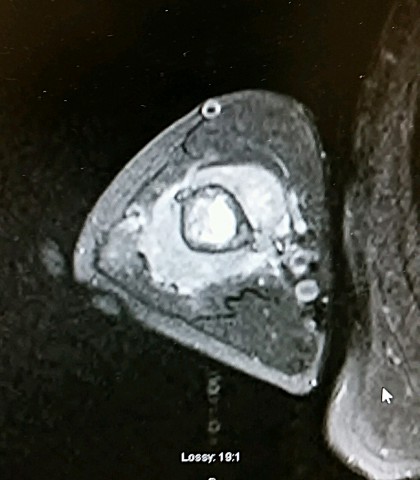
Giant cell tumor is a benign but locally aggressive tumor that can occur in any bone. This tumor is uncommon in the foot. The lesions are located in the metaphysis adjacent to the epiphysis or epiphyseal scar. For this reason, the lesions are located proximally in the first metatarsal (as shown here) and distally in the lesser metatarsals due to the location of the epiphysis. The tumor can cross joints and affect several ajdacent bones. In time, the cortex may be expanded and even destroyed. In smaller bones, the lesion can slowly expand the entire bone into a oversized balloon with cartilage on the end.
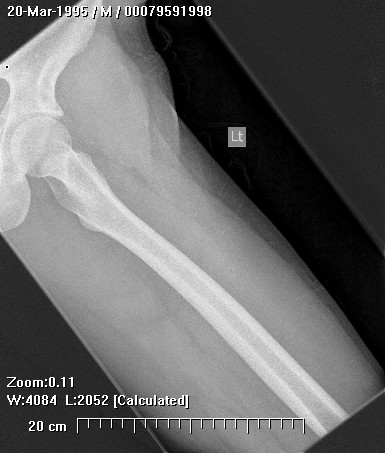
Giant cell tumor accounts for 5 to 9 percent of all primary bony tumors. Giant cell tumors are usually found in the long bones, most often the distal femur, proximal tibia, and distal radius. Giant cell tumor is a one of the most common primary bone lesions in the distal phalanx. Whether that tumor arises in the epiphysis or distal metaphysis is a matter of controversy, but giant cell tumors only occur after the epiphyseal plates have closed and a diagnosis of GCT in a patient with open growth plates should be questioned.
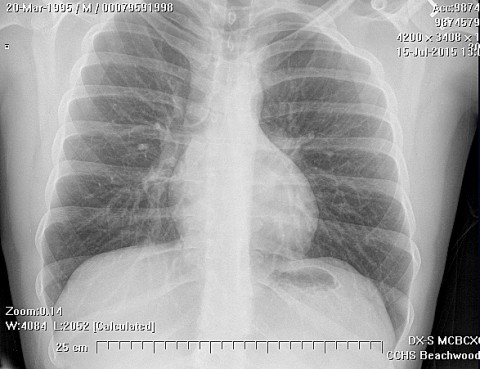
Giant cell tumor of bone is a benign lesion that is a usually solitary and locally aggressive. It is believed by some to be potentially malignant. In the very rare instances this lesion has the potential for metastasis to the lungs and in these cases the lung lesions may behave in an indolent fashioned and even require no treatment. The authors recommend a chest CT scan for all patients newly diagnosed with GCT.
The typical patient has a history of gradually increasing pain. In the foot a mass may be apparent due to the limited soft tissues. Pain from pathological fracture or microfracture may cause the patient to seek treatment.
After performing the "extended curettage", the cavity is filled with a suitable material, such as morcellized bone graft, bone graft substitute, or polymethylmethacrylate bone cement.
Highly expansile primary lesions of the lesser bones of the foot may be excised and the bone may be reconstituted with a structural autograft from the iliac crest with excellent results. Lesions of the phalanges of smaller the lesser toes should be amputated.
Treatment of giant cell tumors is by surgery only. Chemotherapy is not used. Intralesional excision by "extended" curettage is the treatment of choice. Curettage alone is associated with a high recurrence rate, and this can be decreased with the addition of chemical cautery using phenol, multiple freeze-thaw cycles using liquid nitrogen, and treating the walls of the cavity with a high-speed rotary burr. Local recurrence after curettage alone is thought to lead to recurrence in 50% of cases. Recurrence after extended curettage is approximately 10 percent.
The tumor cavity may be filled with polymethyl methacrylate cement or bone graft, according to the surgeon's preference. Some believe that the polymethyl methacrylate cement lowers the risk of a local recurrence due to the large amount of heat given off during hardening. Recurrences are normally treated with a second interlesional surgery. Bone graft may allow for more favorable biomechanics of load inthe nearby joint. The early signs of local recurrence may be more difficult to detect in cases treated with bone graft.
Lesions that are highly expansile and destructive, or lesions that occur in "expendable" bones such as the proximal fibula (as shown here) may be excised with a wide margin. Multiply recurrent giant cell tumors are also treated with wide resection.