Summary
Chondrosarcoma is the most common malignant bone tumor in the foot in some reported series. Most chondrosarcomas are low grade, but dedifferentiated chondrosarcoma can occur in the setting of a longstanding benign cartilage lesion such as enchondroma.
Symptoms and Presentation:
Complete Information on this Tumor
Chondrosarcoma is the most common malignant bone tumor in the foot in some reported series. Patients with multiple cartilage lesions, such as Ollier's disease, or multiple enchondromas are at increased risk. This tumor has several subtypes, including clear cell chondrosarcoma, and mesenchymal chondrosarcoma, which can occur in bone and in the soft tissues, where it presents as as an innocent bump. Most chondrosarcomas are low grade, but dedifferentiated chondrosarcoma can occur in the setting of a longstanding benign cartilage lesion such as enchondroma.
The lesion presents as a slow growing mass with mild pain.
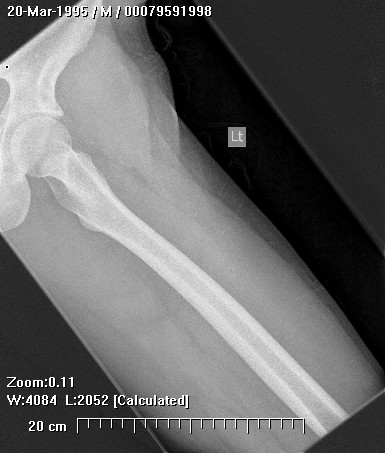
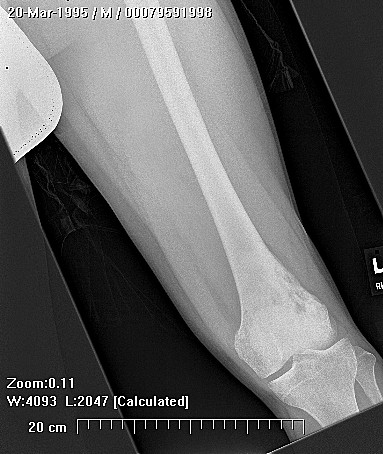
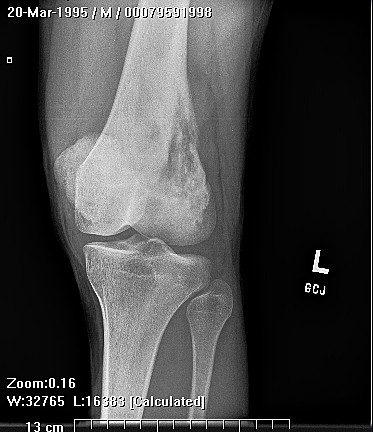
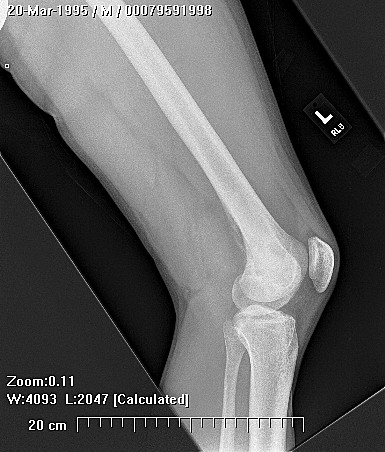
On plain radiographs, chondrosarcoma of the long bones is a fusiform, lucent defect with scalloping of the inner cortex and periosteal reaction. Extension into the soft tissue may be present as well as punctate or stippled calcification of the cartilage matrix.
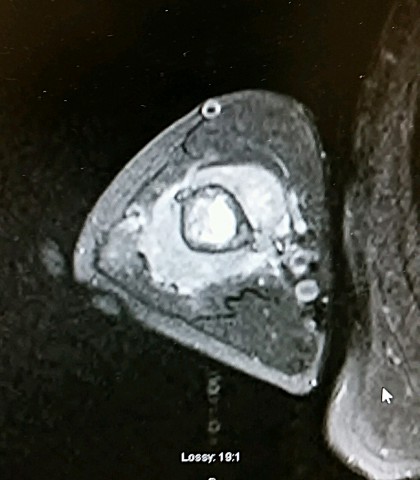
MRi shows high signal intensity on T2 sequences, and low intensity signal on T1 sequences. Calcification within the mass, if it occurs, will appear as very low signal areas.
Chemotherapy and radiotherapy are not effective and are normally not used for lesions in the foot. Rather, complete removal with a wide margin is the correct treatment. Amputation of the affected part is employed if necessary to achieve a wide margin. Incompletely excised lesions should be referred to a musculoskeletal oncologist for re-resection.