Explore Real Clinical Cases

Explore real cases with stories and pictures

Explore Our On-Line Learning Content

Enhance your knowledge of tumors and their management

shoulder, humerus, upper arm
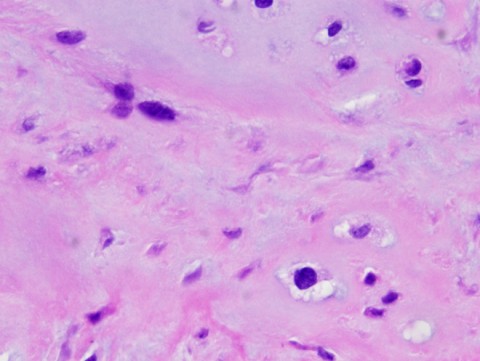
A 10 year old boy with pain in the left clavicle

Case Identification
Case ID Number: 
20100422LC
Benign/Malignant: 
unknown
Clinical case information
Case presentation: 

A 10 year old male had pain in the left shoulder for six months. An initial radiograph was interpreted as showing a non-displaced fracture. A slight fever was noticed which diminished after treatment with antibiotics.

Radiological findings:: 
The initial radiograph was interpreted as showing a non-displaced fracture. After the symptoms continued, a new radiograph was performed, which showed marked changes in the left clavicle.
Laboratory results:: 
On admission the patient's temperature ws 37.5°C. His WBC was 8.5 (4.5 - 9.5) with a normal differential. His electrolytes and liver function tests were normal, and the alkaline phosphatase was 738 (up to 740). The erythrocyte sedimentation rate was 52 (up to 15) and the protein C was 0.72 (up to 0.5). On examination his clavicle was enlarged and slightly tender. There were no neurovascular or cutaneous abnormalities. The motion of the left upper extremity was unimpaired.
Differential Diagnosis: 
Construct a differential diagnosis that has at least three entities; including a benign tumor, a malignant tumor, and a non-tumorous condition.
Image Reference: 

A 10 year old girl who fell during soccer

Case Identification
Case ID Number: 
20090727GF
Benign/Malignant: 
unknown
Clinical case information
Case presentation: 

An ten year old girl presented to her primary care physician with pain after a fall in a soccer game. The initial radiograph is shown at left as the main image.

Radiological findings:: 
Two weeks later she was seen in the orthopedic oncology clinic. New radiographs were taken, shown at left. A followup was arranged for four weeks later. The third radiograph is shown at left.

A 52 year old man with aching pain in the shoulder for 6 weeks.

Case Identification
Case ID Number: 
20091106AB
Benign/Malignant: 
unknown
Clinical case information
Case presentation: 

A 52 year old man had a six week history of aching pain in the shoulder at rest and with activities. On exam, there was pain and tenderness over the proximal humerus and the anterolateral arm, as well as pain with abduction and limitation of motion of the shoulder.

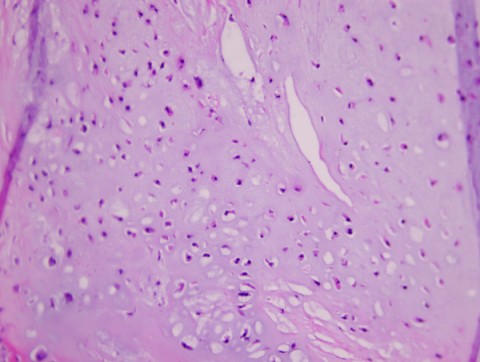
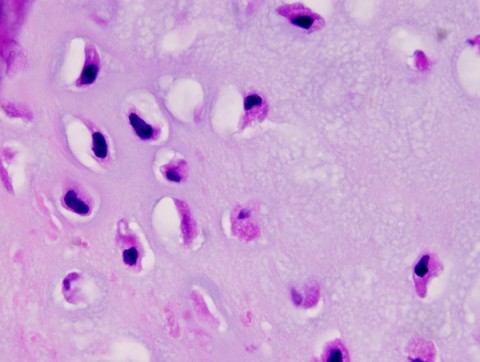
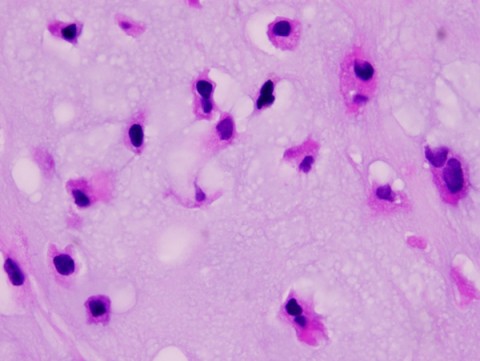
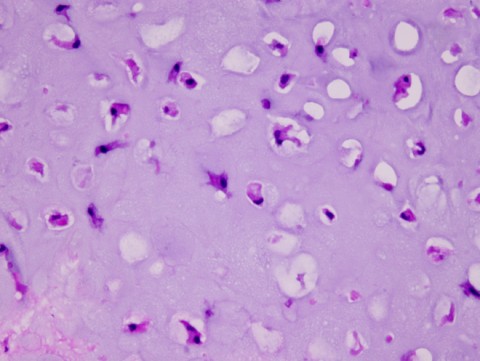
The lesion has a latent appearance and there is no sign of progressive growth. This coupled with the central, metaphyseal location, as well as the dense matrix calcification showing "rings and arcs" (see inset images) identify this lesion as an enchondroma.

Radiological findings:: 
The bone scan shows mild uptake in the lesion, which is expected since the natural tendency of cartilage in an enchondroma is to become replaced by bone over time. This leads to variable uptake on bone scans that should not be interpreted as malignant growth. The enchondroma should be followed with intermittent radiographs for one to two years to insure there is no progressive change. Definite growth in an enchondroma after skeletal maturity (as distinct from progressive ossification without size change) is a sign of neoplastic activity and requires a full work - up. Rotator cuff / subacromial bursa pathology might also cause the symptoms observed.
Special Features of this Case:: 
To resolve the issue of the patient's pain, remember that all of the symptoms can be explained on the basis of rotator cuff tendonitis or subacromial bursitis (call it whatever you prefer). To identify the origin of the pain, this patient had a diagnostic injection of marcaine placed into the subacromial bursa. His pain was completely (and temporarily) resolved. This simple but valuable diagnostic manouver helped pinpoint the origin of the patient's pain and eliminated the "red herring" of the enchondroma. The clinician can reassure the patient about the lesion and focus the treatment on the rotator cuff pathology.
Image Reference: 

A giant cell tumor totally destroyed the right proximal humerus

Case Identification
Case ID Number: 
20100421TD
Periosteal Reaction: 
absent
Benign/Malignant: 
unknown
Clinical case information
Case presentation: 

A 32 year old patient had a giant cell tumor in her right proximal humerus. The AP radiograph and a radiograph taken after the biopsy are shown. Wide resection of the tumor was chosen because the lesion had destroyed too much of the bone and could not be treated with conventional curettage and packing with cement or bone graft.

Treatment Options:: 
What mode of reconstruction for the resulting bone defect will result in the best range of motion of the shoulder according to the literature? What are the three most common complications that may occur following this type of reconstruction?
Special Features of this Case:: 
This case shows a benign tumor which has created a very large defect and the resulting reconstruction is extensive. However, the patient is quite young, and has an excellent prognosis for survival, so the reconstruction chosen must be very durable and the need for reoperations should be avoided. The choice of technique is influenced by the survival probability.
Image Reference: 
Syndicate content