Summary
Epithelioid hemangiomas, also known as angiolymphoid hyperplasia with eosinophilia and histiocytoid hemangioma, are benign vascular tumors that usually occur in the skin and subcutis. They have the potential to occur at any skeletal site. The paucity of cases reported has hindered in determining specific areas of skeletal manifestation.
Complete Information on this Tumor
Epithelioid hemangiomas, also known as angiolymphoid hyperplasia with eosinophilia and histiocytoid hemangioma, are benign vascular tumors that usually occur in the skin and subcutis. However, the diagnosis of this entity is currently being used with increased frequency for vascular lesions of the bone.
There has been, on the other hand, much confusion in the nomenclature and definitions of epithelioid vascular tumors of the skeleton. Because of their unusual cytologic appearance and growth patterns, epithelioid hemangiomas are commonly confused with malignant tumors. In these instances, an epithelioid hemangioma may be erroneously classified as an epithelioid hemangioendothelioma or an epithelioid angiosarcoma , its low grade and high grade malignant counterpart respectively. Occasionally, it may also be mistaken for an infectious process, such as osteomyelitis, because of its intense stromal inflammation.The cause of epithelioid hemangioma remains unknown. There have been reports that local trauma may be associated with the development of epithelioid hemangioma. Other reports show a relation between the development of this disease entity with pregnancy. These cases suggest that epithelioid hemangioma may be a reactive process and that estrogen and progesterone may have a role in its pathogenesis. Boudousquie et al reported that the low grade malignant counterpart of epithelioid hemangioma, epithelioid hemangioendothelioma, has been linked to a complex translocation between chromosome 7 and chromosome 22.
Of the reported cases, males and females are equally affected, with an age presentation between 7-74 years old. None showed local aggressive growth but there was a reported case of recurrence.
Clinically, patients usually present with pain over the involved sites.
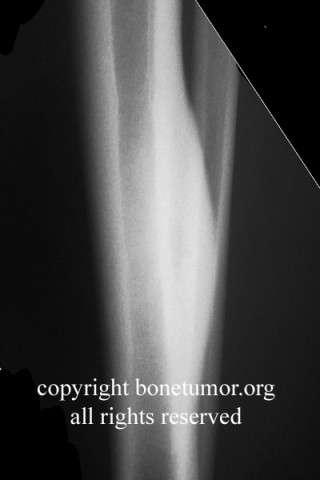
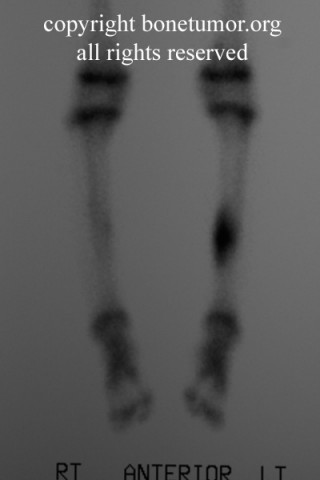
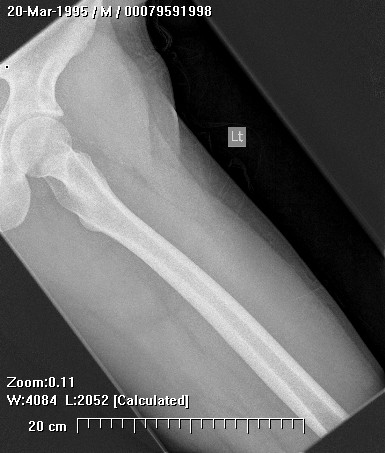
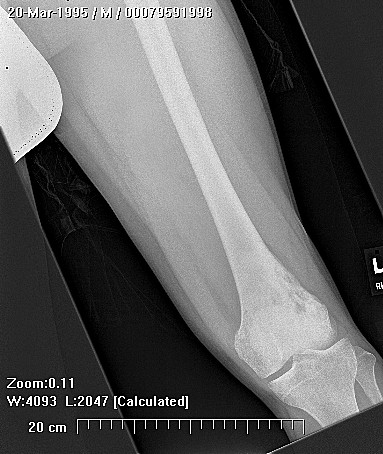
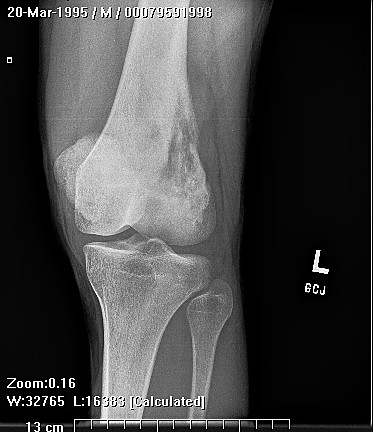
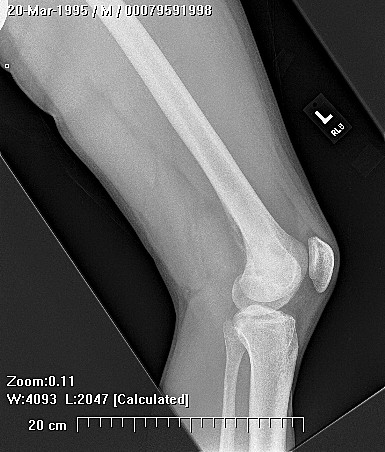
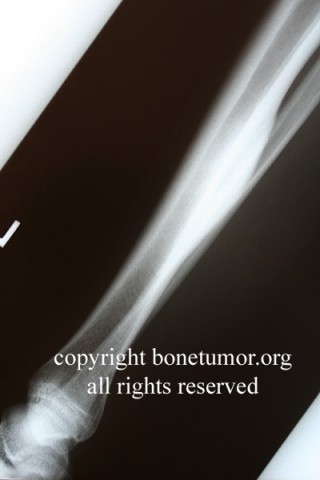
In a series reported by O’Connell, these lesions may present with a mixed lytic and sclerotic pattern of bone destruction. They are usually 2.5 – 12 cm, confined to bone of origin, and may also appear with prominent intralesional bone formation. In some cases, the involved bone may show remodeling or partial loss of the cortex. When the cortex is involved, some form of periosteal new bone formation may be evident.
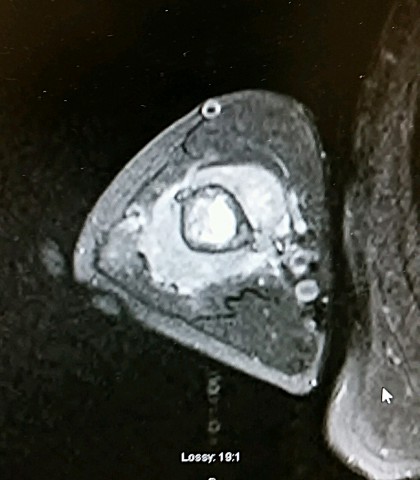
Magnetic resonance imaging provides information regarding tumor characterization, peritumoral edema, cortical disruption, and soft tissue extension. Epithelioid hemangiomas have low signal intensity on T1-weighted images and intermediate signal intensity on T2153 weighted images. Sung et al reported that the signal characteristics of an epithelioid hemangioma indicated that it did not have a pure cystic appearance. The case he described had a central cystic portion with a high signal intensity on T2-weighted and gradient echo sequences.
The histologic differentials include epithelioid hemangioendothelioma, angiosarcoma, and metastatic carcinoma. The vasoformative nature of epithelioid hemangioma and the presence of plump endothelial cells, inflammatory cells and an abundant cytoplasm can also be seen in epithelioid hemangioendothelioma. ]
Epithelioid hemangioma can be distinguished from hemangioendothelioma by the presence of mature, well-formed vessels with open lumina surrounded by multiple epithelioid endothelial cells within the abundant cytoplasm characterizing a “tombstone” appearance. In its low grade malignant counterpart, there are less obvious lumina with cells arranged in nests and cords within a myxoid-hyaline stroma.
Angiosarcomas may also present with epithelioid cytologic features. These high grade tumors can be distinguished from epitheliod hemangiomas by their characteristic nuclear pleomorphism and brisk mitotic activity. The absence of cellular atypia and mitotic activity separates epithelioid hemangioma from a metastatic carcinoma.
Embolization, sclerotherapy, cryotherapy or radiofrequency ablation may be used as an adjunct to surgery in the treatment of hemangioma. Angiographic embolization of feeding vessels to a tumor has been effective in minimizing intraoperative blood loss. Gabal reported satisfactory results after treating vertebral hemangiomas with sclerotherapy and embolization. Rosenthal et al reported that radiofrequency ablation may be a suitable adjunct in the treatment of an aggressive vascular tumor. It can limit the requirement for surgery when wide resection would result in significant functional or cosmetic deficits.
As Wenger and Wold pointed out in their report, there is still no definitive treatment for epithelioid hemangiomas of bone given the limited experience reported in the literature.